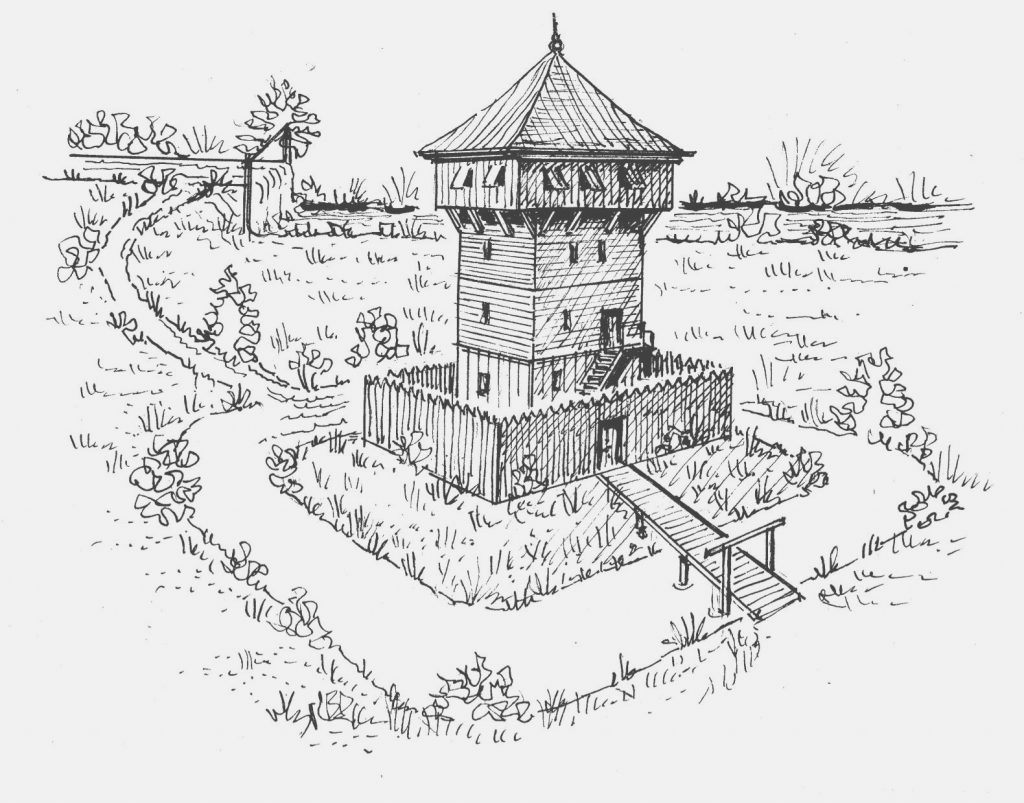
Originally, around the year 1000 AD, Unsleben was likely the site of a motte-and-bailey castle: a moat was dug, a hill was built in the center, and a wooden tower was erected on top. Around 200 years later, a more durable stone tower was built. Parts of this tower can still be seen today, incorporated into Unsleben Water Castle.

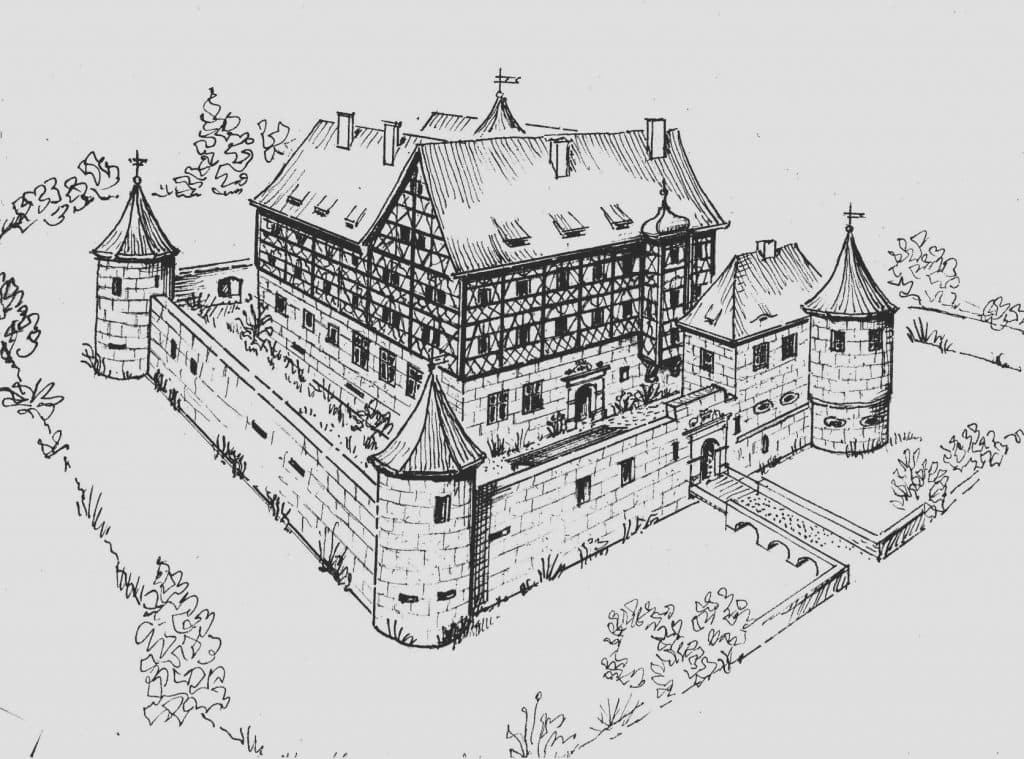
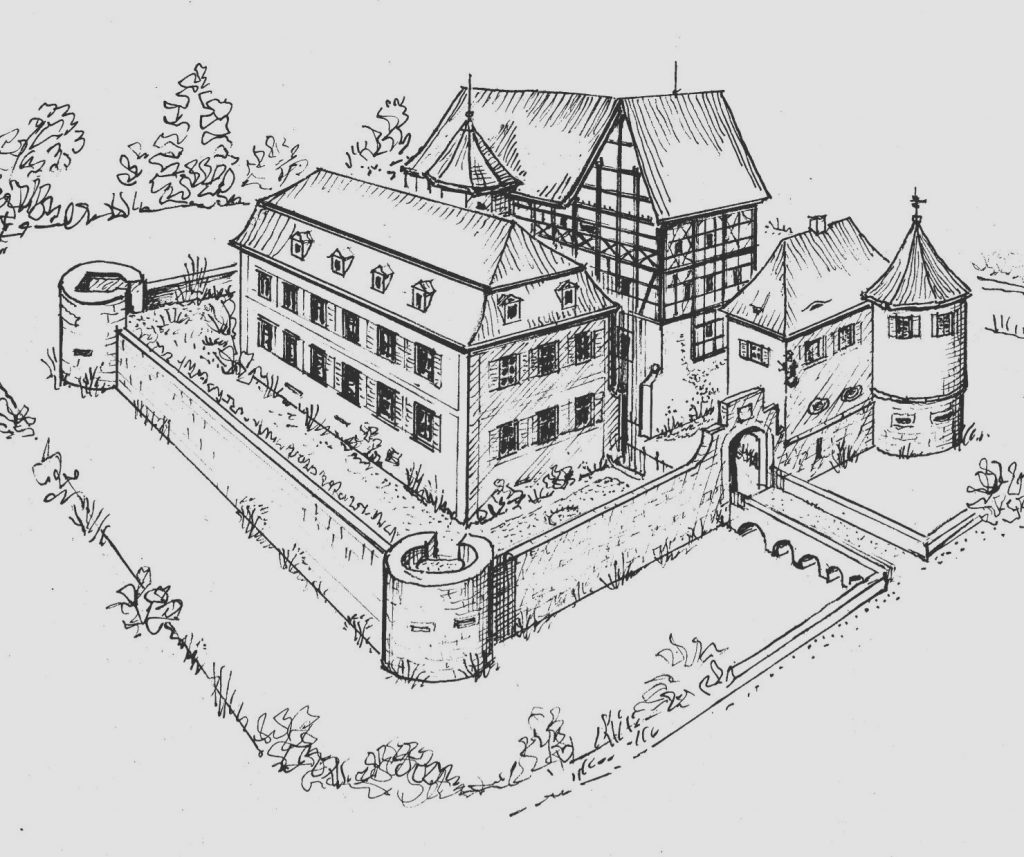
On Easter Monday in 1525, during the Peasants’ War, the castle was partially destroyed by fire, but it was rebuilt just two years later. Cornelius Freiherr von Habermann, Chancellor of the Court of Würzburg, Imperial Councillor, and Count Palatine of the Court, gave the west wing a Baroque makeover with a mansard roof. He removed the connecting structure between the two wings to allow more light into the inner courtyard. He also replaced the drawbridge with a stone bridge. The castle received only minimal repairs from previous generations. Major restoration work did not begin until the 1980s.
In 1996, we were awarded the Hypo Cultural Foundation’s Monument Preservation Prize, which supported the preservation of the castle and estate. Furthermore, the castle is listed under the Hague Convention for the Protection of Cultural Property in the Event of Armed Conflict, which seeks to protect special cultural assets. In 2008, a grant from the Lower Franconia District enabled us to initiate several urgent restoration projects. Most recently, the east wing, which had become unstable due to structural alterations in the 17th and 18th centuries, underwent extensive structural stabilization. Further preservation measures followed.